Embroidery digitizing is not just about converting an image into stitches. A design that looks good on the computer screen can look terrible on fabric if the person creating the design doesn’t take into account the movement of the fabric. One of the main ways to avoid this is through the use of push and pull compensation. It helps keep the embroidered design looking right in shape, size, and position. At Impact Digitizing, we make sure every design uses proper compensation techniques.
What Is Pull Compensation in Embroidery?
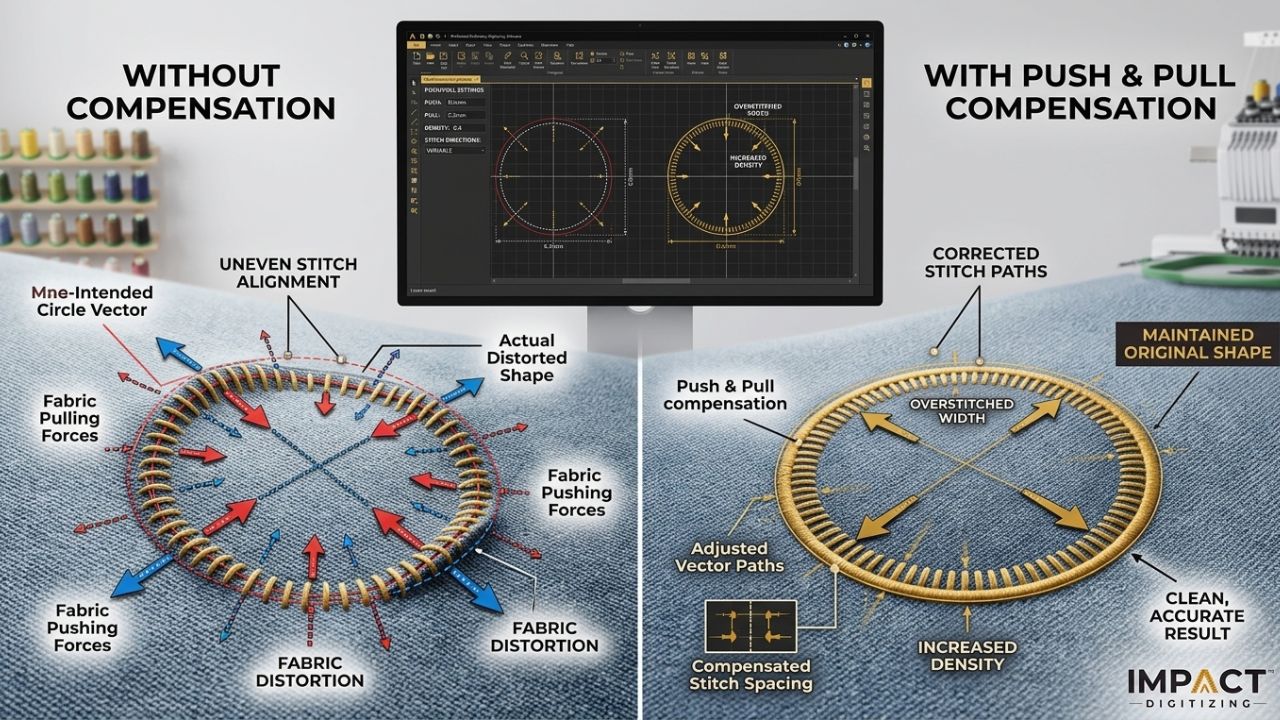
Many people want to know what pull compensation is in embroidery. To put it another way, it’s a method of managing digital designs to prevent the cloth from being pulled inward by the stitches. When you embroider, the tightness of the thread and the insertion and removal of the needle into the fabric many times result in a pull effect. This reduces the thickness of a satin stitch or a border compared to how it looks in a design program. To solve this, digitizers make these areas a little bigger before putting them together.
This process is called pull compensation embroidery. It makes sure that the final stitched design looks like the original artwork. Skilled digitizers also refer to embroidery pull compensation when ensuring that the final result maintains correct sizing and proportions. For more insights on common pitfalls during the digitizing process, you can check out common mistakes in digitizing projects.
Understanding Push and Pull Effect
Two natural things happen when doing machine embroidery:
- Pull: Stitches pull the fabric together in the direction they go. Moreover, they can look smaller and thinner as a consequence.
- Push: The cloth can be pulled out at the ends if the stitches get too tight, especially if they are close to each other.
All embroidery work has these effects. The embroidery designs may have uneven edges, unshaped areas, and spaces between the embroidery lines and fills if the embroidery pull is not set properly. Proper embroidery pull compensation ensures the design stays true to the original.
Where Pull Compensation Is Most Needed
Some parts of embroidery designs need to be adjusted carefully because they are more sensitive to pulling.
- Satin Columns: Satin stitches tend to curl inwards. If you don’t add compensation, the text and edges might appear thinner than expected.
- Small Lettering: Small letters can easily change when the fabric moves. Good pull compensation makes small text easy to read and clear.
- Outlined Shapes: When a filled area is sewn before the outline, it might get a little smaller. Digitizers sometimes slightly overlap parts to avoid seeing any spaces.
The type of stitch also affects how pull compensation is applied. For example, learning about types of stitches in embroidery digitizing helps determine which stitches need more compensation and which are more stable.
Factors That Affect Pull Compensation
The amount of pull compensation embroidery required varies for each design. There are a lot of things that affect the behavior of the fabric as the embroidery takes place.
- Fabric Type: Some fabrics, like knits, stretch more easily than others, like denims or twills.
- Stitch Density: Dense stitchery can cause the fabric to behave by creating tension.
- Stitch Direction: The way the stitches are arranged affects the look of the fabric as the embroidery takes place.
- Thread and Machine Settings: The tightness of the thread and the speed of the machine also affect the fabric.
Because of these factors, skilled digitizers often check designs to make sure they are balanced correctly.
Why Professional Digitizing Matters
Push and pull compensation is one of the main differences between simple digitizing and professional embroidery digitizing. Instead of copying the artwork exactly, skilled digitizers change the shapes, stitch directions, and overlaps so the final embroidery looks right on the fabric. Good embroidery pull compensation makes sure that edges are neat, letters look even, and the design looks the same on different clothes.
Conclusion
Knowing what pull compensation in embroidery is important for getting good results. As fabric changes shape as you sew on it, you can prevent this from happening by making adjustments as you are designing. Digitizers at Impact Digitizing ensure that the embroidery is stitched correctly, maintaining its original sizes, and is clearly visible on the final product through the correct pull compensation techniques used in embroidery.
FAQ’s
What are push and pull compensation in embroidery?
It changes the widths and shapes of stitches to stop any stretching from the fabric when stitching.
How much pull compensation should I use?
It changes depending on the fabric and stitch type, usually between 0. 2 mm and 0.5 mm.
What is the push and pull method of production?
Push makes products based on predictions, while pull creates products based on what customers actually want.
Why is it called push and pull?
One force pushes the fabric out while the other pulls the stitches in when doing embroidery
What are the three types of push and pull factors?
Economic, social, and environmental reasons often affect why people leave a place or move to a new one.