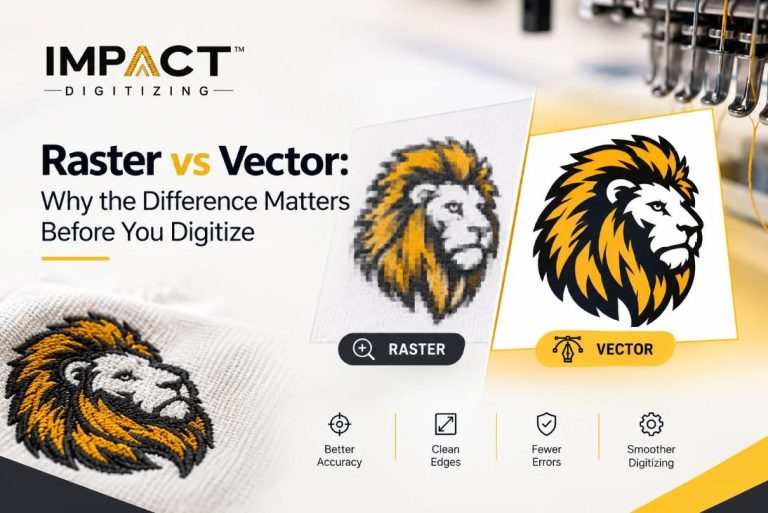
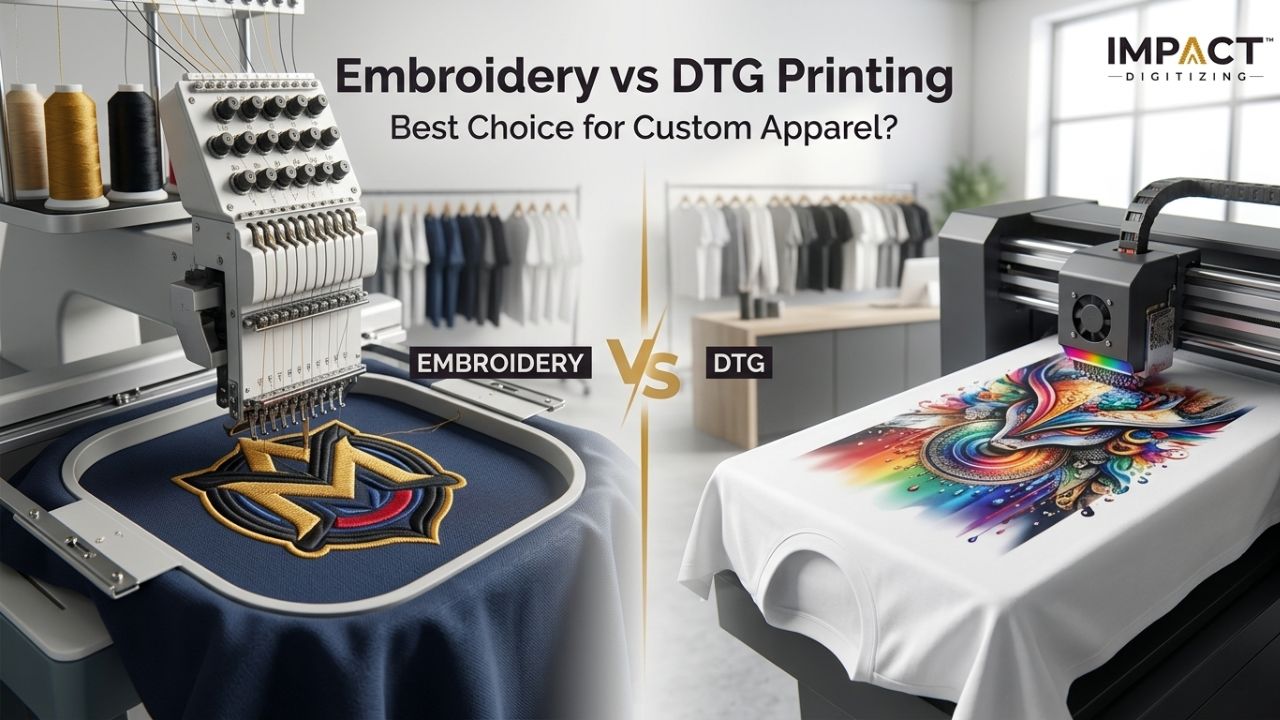
Embroidery vs DTG printing based on the design, material type, and designed use of the equipment. The result from embroidery will give a beautiful 3-D effect and will be professionally done. DTG printing needs the injection of ink into your fabric to produce sharp details of patterns and colors. Impact Digitizing assists you in choosing the best method so that your custom apparel will look fabulous and durable.
What Is Embroidery and How Does It Work?
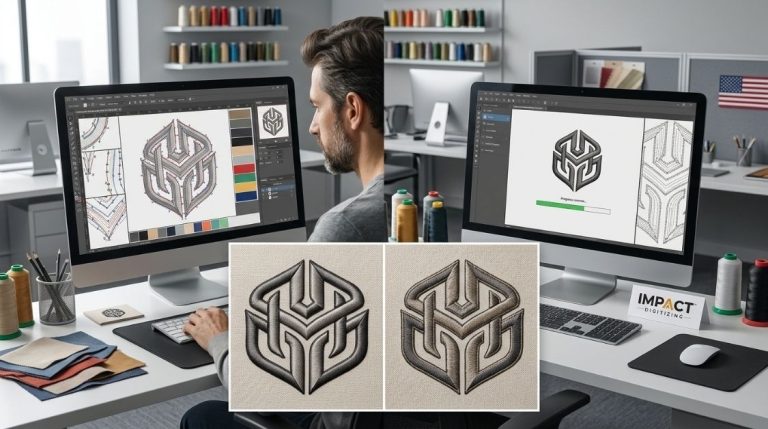
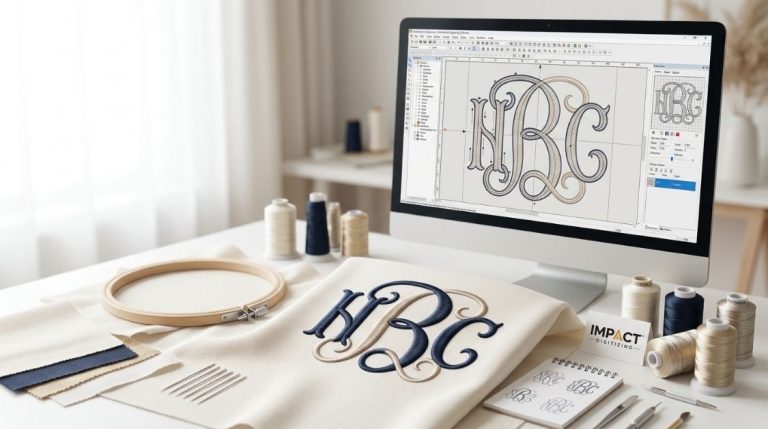
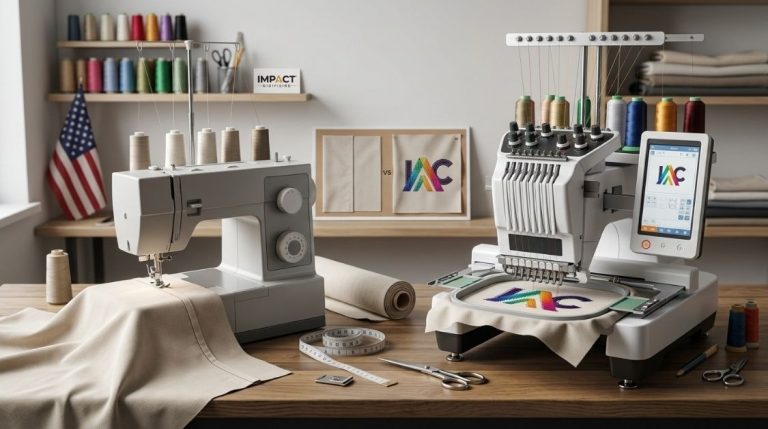
Embroidery stitching involves threads on the material, utilizing a sewing machine. Artwork will be scanned first, along with the directions regarding the number of stitches and how dense they should be.
- Creates a three-dimensional effect and looks like fabric.
- Polo t-shirts, caps, and uniform tops are suitable materials.
- Durable and lasts even longer than the material.
- Best suited for heavier materials include fleece, wool, and synthetic blends.
Embroidery adds a professional, classic touch, creating it best suited for professional apparel and long-term branding.
What Is DTG Printing and How Does It Work?
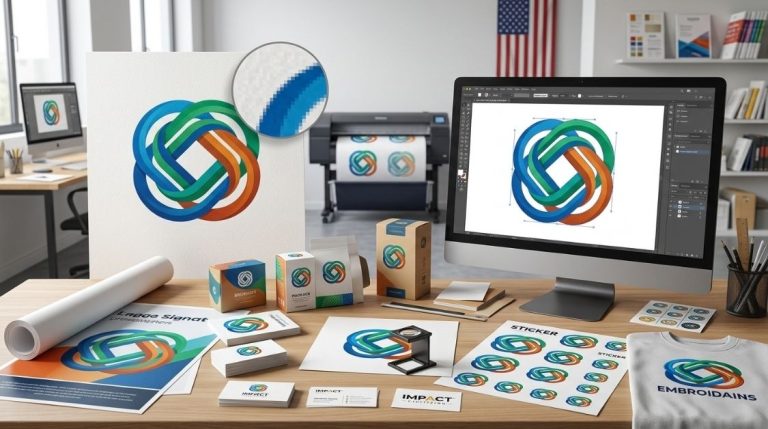
DTG printing uses inkjet technology to spray water-based ink onto the fabric. This does not require any stitches, but a digital upload and print on fabric in vibrant colors.
- Best for use with cotton and cotton blends.
- Can be utilized for complex images, gradations, and unlimited colors.
- Ink fuses with the fabric, providing a soft touch.
- Does not work for heavier fabrics.
- Best for personalized prints and designs.
DTG printing works best with small runs, custom tees, and photoshopped prints. For more information on this method and how it can elevate your custom apparel, check out our DTG printing guide.
Embroidery vs DTG Printing: Side-by-Side Comparison
| Factor | Embroidery | DTG Printing |
| Durability | Exceptional lasts longer than the garment | High fades after 50+ washes |
| Best for | Logos, uniforms, caps | Photos, graphics, large prints |
| Fabric compatibility | Cotton, polyester, wool, fleece | Best on cotton/cotton blends |
| Texture | Raised, 3D, premium feel | Flat, soft, breathable |
| Color complexity | Solid shapes, limited colors | Unlimited colors, photographic detail |
| Cost driver | Stitch count + digitizing fee | Design size + print area |
| Setup required | Digitizing file needed | No direct upload |
Which Is the Best Printing Method for Logos?
The choice of printing method for logos would depend on how complex the logo design is:
- Embroidery technique suits logos that require bold images up to 10,000 stitches and gives the garment a raised look.
- DTG printing should be considered where there are gradients, photos, or large chest logos.
When printing uniforms and clothes that will last a long time, embroidery would be a better choice. When it comes to small orders and bright colors, DTG is definitely worth considering. Picking the proper printing method for logos will guarantee quality and a good appearance.
Which Fabrics Work Best for Each Method?
DTG printing and embroidery printing have distinct differences depending on the fabric type, especially when comparing DTG printing vs embroidery.
- Cotton, polyester, fleece, wool, and jackets are some fabric types for embroidery printing applications.
- The process of DTG printing utilizes 100% cotton or cotton-based fabrics to take the ink.
- They include uniform shirts with embroidered logos, coats, and caps.
- DTG printing uses light shirts and art pieces.
Proper digitizing ensures thread placement is optimized for any fabric type, especially when deciding between DTG printing vs embroidery for specific materials.
Cost Comparison: Embroidery vs DTG Printing
| Cost Factor | Embroidery | DTG Printing |
| Setup cost | Digitizing fee (one-time) | None |
| Per-unit cost driver | Stitch count | Print size + ink coverage |
| Best value for | Small logo runs, uniforms | Large colorful designs, small batches |
| Long-term durability | High design won’t fade | Moderate may need reprints |
You have to pay a fee to turn your design into a digital file for embroidery, but you can use that file as many times as you want. DTG printing has no setup fees, so it’s great for changing designs often.
Which Method Is Right for Your Custom Apparel?
- Use embroidery to put logos on firm fabrics like uniforms, jackets, and hats.
- Use DTG printing for photo designs, color fades, or small orders.
Many clothing brands combine two styles to look great: they use embroidery on the front and digital prints on the back. A digitized embroidery file will ensure that the design is sewn exactly to specification onto all the garment parts. Comparing DTG printing vs embroidery helps brands balance texture and color detail.
Conclusion
An embroidered logo is durable and professional, while a DTG print is flashy and has high-end designs. The two techniques can suit your needs differently based on design and budget, among others. At Impact Digitizing, we make sure your logo comes out looking professional and memorable. Combining both methods will assist make memorable custom clothes that will last longer, whether you choose DTG printing vs embroidery as your preferred printing method for logos.
FAQs
What is better, DTG printing or embroidery?
Embroidery for durability; DTG for detailed, colorful designs. Depends on the fabric and purpose.
What is the easiest embroidery technique?
Satin stitch is simple, smooth, and perfect for beginners and small logos.
Which embroidery is trending now?
3D puff and minimalist designs are popular for modern apparel.
What is the modern printing technique?
DTG printing fast, full-color, detailed designs on cotton garments.
How to improve embroidery quality?
Use quality threads, stabilizers, proper digitizing, and test stitches.