Quick Answer Box
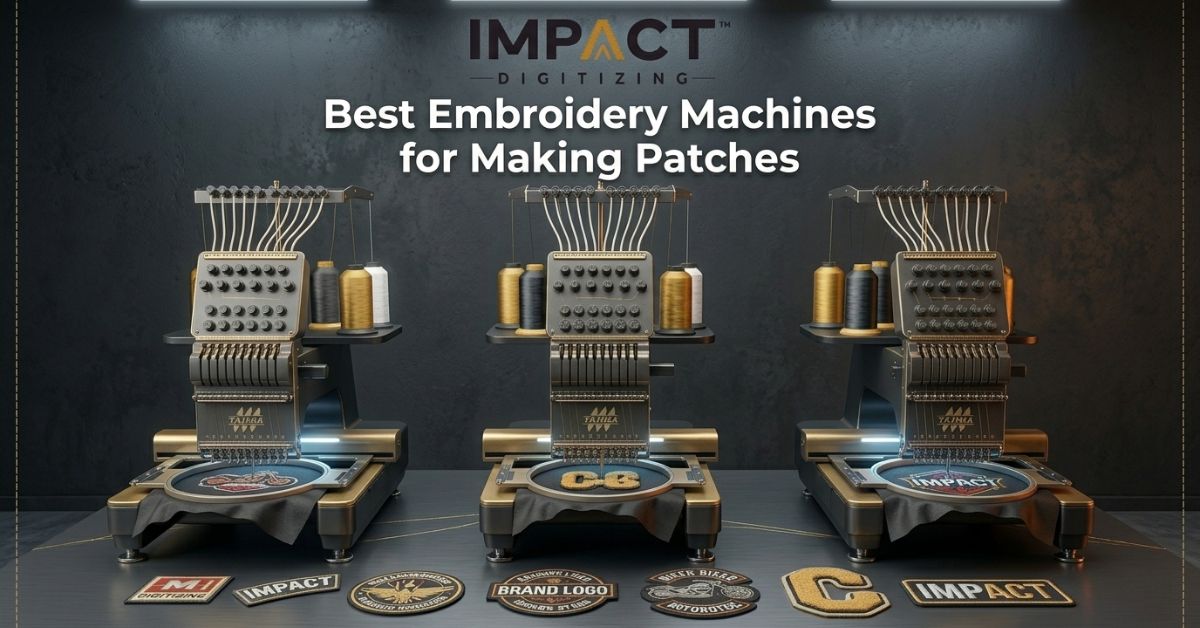
The best embroidery machines for making patches in 2026 include the Brother PR1055X, Ricoma EM-1010, and Ricoma CHT2. These are top-tier commercial embroidery machines for patches featuring multi-needle setups, DST/PES format support, and high-density stitch precision. Prices range from $500 for home hobbyist models to $10,000+ for industrial production.
A great embroidery machine for patches by 2026 must be well-balanced in its density and speed of work. With the increasing popularity of custom merchandise and sports apparel, it is crucial to pick an embroidery machine suitable for DST and PES file formats to achieve excellent results in patch embroidery. Regardless of whether you consider yourself a hobbyist or a businessperson, the proper choice of a patch embroidery machine made by Brother and Ricoma will ensure you get high-quality patches.
Why Embroiderers Are Choosing Specialized Patch Machines in 2026
Patches can be made by machine embroidery. However, all patches cannot be made alike. In 2026, there will be a requirement for additional stitching to produce patches for drop-culture garments and branded products compared to ordinary patches.
- Density Handling: Dedicated Brother and Ricoma sewing units are made to handle the density of the stitches required for high-quality edges without getting tangled up.
- Efficiency: A commercial embroidery machine for patches with multiple needle units can be loaded with 15 various shades without stopping, which is vital for complex custom patches like military or educational insignia
- Format Flexibility: Modern production relies on the DST format for its universal compatibility across commercial platforms.
At Impact Digitizing, we provide patch-optimized digitizing files specifically tailored to these high-performance machines to ensure your edges never fray. Explore Custom Embroidered Patches for high accuracy and reliability in batch production processes.
Quick Comparison: Top 5 Machines at a Glance
Which machine for embroidered patches is best? See how the top models compare in terms of needles and DST/PES/JEF formats.
| SNO | Machine | Needles | Formats | Best For |
| 1 | Brother PR1055X | 10 | PES, DST | Commercial Shops |
| 2 | Ricoma EM-1010 | 10 | DST, EMB | Entry Commercial |
| 3 | Ricoma CHT2 | 15 | DST, JEF | High Volume |
| 4 | Brother PE800 | 1 | PES, PHC | Home/Hobby |
| 5 | Bernina 790 Plus | 1 | EXP, DST | Precision/Detail |
1. Brother PR1055X: Best Commercial Multi-Needle
The Brother PR1055X is the gold standard commercial embroidery machine for patches. Its 10-needle system means you can run complex, colorful patches without stopping for manual thread changes. To better understand if this level of equipment fits your workflow, read our guide on single-needle vs multi-needle machines.
- Key Feature: The built-in camera allows for perfect placement on pre-cut patch blanks, ensuring your borders align every time.
- Compatibility: Fully supports PES and DST formats, making it seamless to use with professional digitizing.
- Verdict: Best for businesses doing consistent daily patch runs.
2. Ricoma EM-1010: Best Entry-Level Commercial
As a versatile patch embroidery machine, the Ricoma EM-1010 offers a bridge between home use and full industrial scale.
- Speed: 1,000 SPM (Stitches Per Minute) handles high-density fills and thick satin columns easily.
- Ease of Use: Comes with a massive training ecosystem, perfect for newcomers to the world of machines.
- Verdict: The most cost-effective way to start a professional patch business.
3. Ricoma CHT2: Best for High-Volume Production
If you need to make a lot of custom embroidered patches for uniforms or sports teams, the Ricoma CHT2 is a strong machine for embroidered patches.
- Features: Multi-head setups let you make several patches at the same time.
- Versatility: Handles heavy twill and felt substrates without breaking a sweat.
- Verdict: The ultimate choice for industrial-scale fulfillment.
4. Brother PE800: Best Home Machine for Patches
The Brother PE800 is the best choice for anyone looking to purchase a machine for embroidered patches but has very little experience, and wants to keep costs down.
- Limitation: Manual changeover of threads, as it is a single-needle machine.
- Pros: Small footprint, reasonable prices, and compatibility with the popular PES file format.
- Verdict: This machine can be used by hobbyists but is unsuitable for commercial purposes.
5. Bernina 790 Plus: Best for Precision & Format Range
This patch embroidery machine is renowned for the “Bernina Stitch Regulator” feature that guarantees mathematical perfection of every satin stitch in the patches’ border design.
- Format Range: This machine can read different formats, just like the other machines. It offers EXP, DST, JEF, and VIP file formats.
- Quality: Famous for their precision in producing high-quality embroidery without any puckering in thin patches.
- Verdict: Perfect for boutique designers concerned with stitch quality instead of pure speed.
File Formats That Matter for Patch Embroidery
What file format does a commercial embroidery machine for patches use?
- DST: The universal commercial standard used by Tajima and Ricoma.
- PES: The native format for Brother machines.
- JEF: Primarily used for Janome and some multi-head setups.
- EXP: Common for Bernina and commercial Melco machines.
Fabric choice impacts stitch quality; the wrong fabric can cause puckering or weak edges. See Best Fabrics for Machine Embroidery for durable results.
Do You Need a Machine or Custom Patch Service?
Not every business needs to own a commercial embroidery machine for patches. Taking care of machines can be expensive. Impact Digitizing provides complete production services.
- No Equipment Needed: We take care of the digitizing and sewing for you.
- Versatile Backings: You have a choice between iron-on, velcro, or sew-on types.
- Fast Turnaround: Most likely, faster than figuring out a new machine.
Conclusion
Selecting the patch embroidery machine to create patches in 2026 will largely depend on the number of patches needed. Brother PR1055X and Ricoma machines are widely used in companies since they have multi-needle capability. Single-needle machines, such as the Brother PE800, are a great machine for embroidered patches for hobbyists, too. The trick is to mind the format compatibility and the right stitch density.
Impact Digitizing delivers expert, production-ready patches, eliminating equipment costs while ensuring industrial-grade quality.
FAQs
1. Can any embroidery machine make patches?
Yes, but commercial multi-needle machines handle high-density patch borders much more reliably than home models.
2. What hoop size do I need for patches?
A 4×4-inch hoop is standard, though larger hoops allow for “ganged” production of multiple patches.
3. Do I need a DST file to make patches?
While PES works for Brother, DST is the universal commercial standard for precise density and production control.
4. What is the best fabric base for embroidery patches?
Poly-cotton twill is the industry standard for durability, while felt is popular for vintage-style chenille looks.
5. Can I make iron-on patches with an embroidery machine?
Yes, you simply apply a heat-activated adhesive backing to the patch after the embroidery process is complete.
6. What stitch count is typical for a patch?
A standard 3-inch circular patch typically ranges from 6,000 to 12,000 stitches, depending on the detail.
7. Is a commercial machine better than a home machine for patches?
Yes, commercial machines offer the speed, needle count, and tension control required for professional-grade borders.