Appliqué embroidery technique is a very smart way of incorporating more color, more interest, and depth into your designs using fewer stitches and less time. If you are looking forward to converting your applique designs into digital formats correctly, this guide is here to help you with each step in a very simple way. At Impact Digitizing, we specialize in transforming your artwork into flawless embroidery-ready files, showing you exactly how to digitize applique designs.
What is Applique Digitizing?
Applique digitizing is a way of converting your design into an embroidery file. Using applique digitizing, it is possible to attach different pieces of fabric to a material using special stitch patterns. Instead of stitching a lot to cover a large area, the appliqué technique uses a piece of fabric held together by embroidery stitches.
This technique uses fewer threads, no design is required, and it is best for large designs such as logos, team names, and children’s clothing.
Step-by-Step: How to Digitize Applique Designs
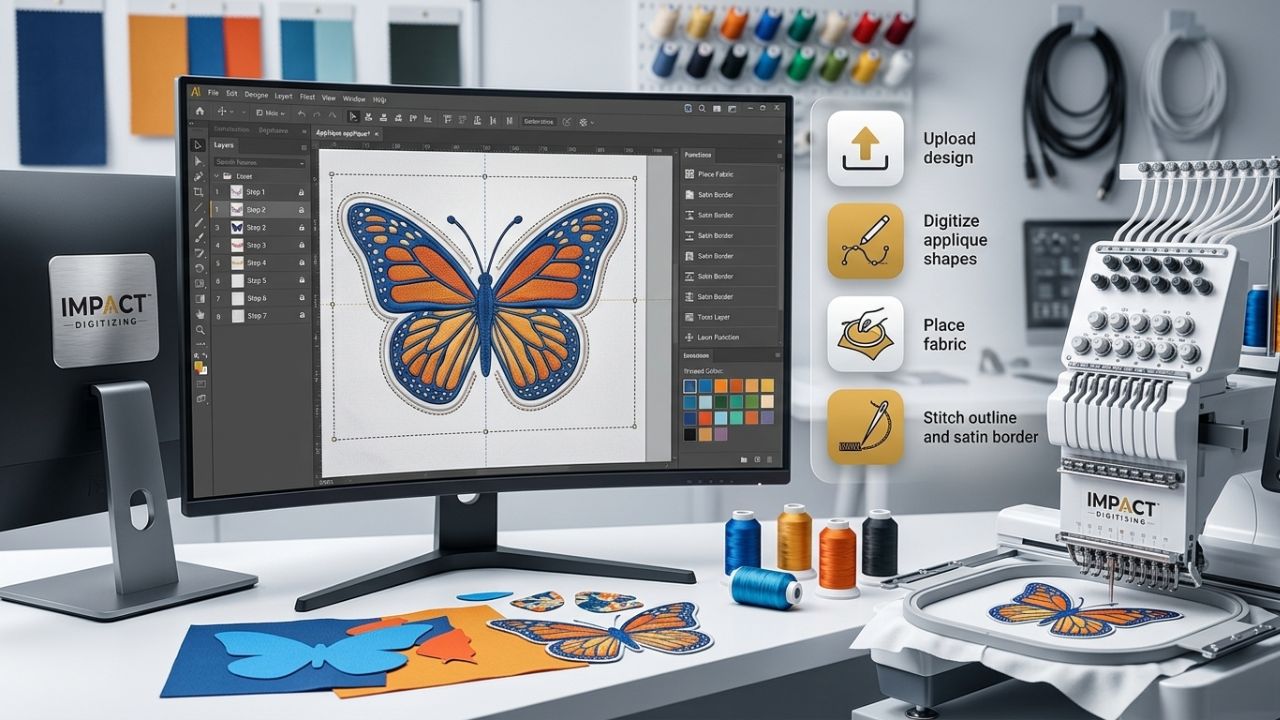
The following are the main steps that everyone working with digital content must follow. Here, we also include the full appliqué embroidery digitizing steps:
1. Prepare the Artwork
Start with good images. To ensure crisp edges and clear shape definition, vector images like AI, EPS, or SVG are best. Avoid complex details for applique areas.
2. Define the Applique Area
Outline the shape to be replaced with fabric. Keep shapes simple and smooth. Sharp corners can cause puckering during stitching.
3. Create the Placement Stitch
Add a light running stitch to show where to place the fabric. Accuracy at this stage is critical. This helps align the appliqué properly on the garment.
4. Add the Tack-Down Stitch
Use a second running stitch to secure the fabric to the base material. This keeps the fabric stable before trimming. It prevents shifting during the next steps.
5. Trim the Excess Fabric
Trim fabric close to the tack-down stitch. A clean finish is ensured with clean trimming. There should be no excess fabric that could cause interference with the cover stitch.
6. Use Cover Stitch (Satin or Zig Zag)
Cover the edges of your fabric with a satin or zigzag stitch. Satin stitches ensure that logos look classy. Depending on the type of fabrics, you may want to vary the density.
Manual Applique Digitizing: Why It Matters
You can have more control over the type of stitches, density, and finishing of edges when you use manual applique digitizing, as it allows you to:
- Control pull compensation.
- Adjust stitch angles for better coverage.
- Prevent gaps between fabric and cover stitch.
- Optimize your image for various fabrics.
Using manual applique digitizing ensures precise results and higher quality. Fabric type is commonly overlooked by automated software, which may lead to puckering or improper alignment.
Important Technical Settings
To achieve professional results, pay attention to:
- Pull Compensation: Add 0.2–0.4 mm to avoid gaps.
- Underlay: Essential for clean borders.
- Stitch Direction: Follow the shape flow for smooth satin.
- Fabric Choice: Cotton, twill, felt, and polyester are best used.
These are key elements in the appliqué embroidery digitizing steps. If these settings are skipped, it can result in gaps, puckering, or loose borders.
Common Mistakes to Avoid
Using very small details for appliqué.
- Skipping tack-down stitch.
- Overly dense satin borders.
- Poor trimming before the cover stitch.
- Ignoring fabric stretch.
Always test the design before bulk production.
Learn More About Our Appliqué Services
For a professional, high-quality result every time, check out our detailed appliqué digitizing services. At Impact Digitizing, we employ manual applique digitizing techniques to ensure that your designs are not only bright but also long-lasting and easy to embroider.
Conclusion
It does take practice to digitize appliqué correctly, but it is well worth it. Professional and durable stitchwork can be achieved through accurate stitch ordering, clear outlines, and finishes. Special and outstanding designs can be made, as well as efficient use of yarn and maintaining quality on various fabrics, through concentrating on precision and manual appliqué digitizing. At Impact Digitizing, we focus on appliqué with balance, clarity, and a polished finished product not just filling in fabric with stitchwork.
What are appliqué techniques?
Decorative methods of attaching fabric pieces to a base using stitching.
What is the best fabric for appliqué letters?
Cotton, twill, felt, and polyester blends work best for durability.
How many types of appliqué work?
Main types include raw-edge, satin stitch, reverse, and decorative appliqué.
What stitch is used for appliqué?
Satin stitch is the most common; zigzag and blanket stitches are also used.
How to do applique designs?
Place fabric, secure with tack-down stitch, trim excess, then cover edges with satin stitch.