When choosing between single-stitch and double-stitch embroidery, the distinction can be made on various grounds, including both aesthetic and structural ones. Many times, the clients tend to observe that the designs seem thin or distort the fabric without knowing that the problem was caused by their choice of stitch. Knowing how to embroider will make sure that you have a product that is not only appealing but sturdy too. Visit Impact Digitizing for professional guidance on selecting the right stitch techniques for your projects.
Single Stitch vs Double Stitch: The Short Version
Clients often ask why an outline looks thin on their shirt compared to their screen, or why the fabric is bunching up. The answer is usually the single stitch vs double stitch choice. It’s not just about how it looks; it’s about how the stitches behave on the fabric.
- Single stitch: A single pass of the needle. Best for delicate work.
- Double stitch: Two passes over the same line. Best for bold, durable designs.
- The stakes: Choosing the wrong one leads to thread breakage or designs that get lost in the garment’s texture.
What Single-Stitch Outline Embroidery Does
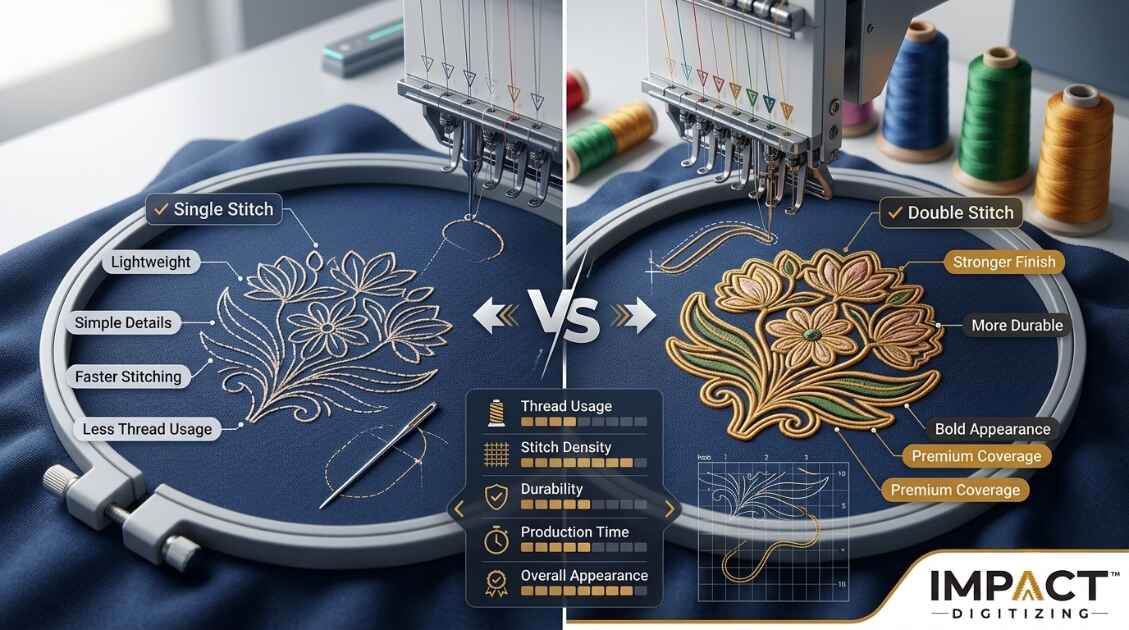
When you use a single-stitch outline embroidery path, the needle passes along the line exactly once. It is a quiet, precise way to define a shape.
- Minimal impact: Keeps the overall stitch count low.
- Fabric-friendly: Reduces the chance of puckering on thin, delicate materials.
- Subtle results: Great for designs that need a fine, clean line.
- Risk reduction: Fewer threads means a lower risk of thread breakage.
For those diving deeper into professional production, mastering single-stitch outline embroidery is a fundamental step in your overall stitch-types-comparison embroidery digitizing workflow. You can learn more about how this baseline works in our guide on types of stitches in embroidery digitizing.
What Double Stitch Adds (and Why Digitizers Use It)
The double stitch embroidery’s meaning is straightforward: the machine retraces the same path twice. This adds physical weight to the outline, helping it stand out against the material.
- Added Definition: Double stitching makes logos appear bolder and more intentional.
- High durability: Performs well when used on items such as caps, denim, and jackets.
- Strategic density: Needs strategic planning for push and pull compensation to prevent over-compensation.
- Professional finish: Ensures the outline survives frequent washing and daily wear.
Understanding the double stitch embroidery meaning helps digitizers anticipate how a design will interact with the garment’s surface.
Quick Comparison: Single vs Double at a Glance
When performing a stitch type comparison in embroidery digitizing, it helps to look at the mechanical differences side-by-side.
| Factor | Single Stitch | Double Stitch |
| Needle passes | 1 | 2 |
| Visual weight | Light, subtle | Bold, defined |
| Best fabric | Lightweight, delicate | Heavy, textured (denim, twill) |
| Thread breakage risk | Lower | Slightly higher if density’s off |
| Underlay needs | Minimal | Usually required |
| Common use | Fine detail, small text | Logo outlines, caps, patches |
When Double Stitching Makes Sense
When to use a double running stitch depends on the conditions the clothes will experience. If you want durability in a design, the safest way out would be double stitching.
- Thin lettering: This helps make thin designs visible on textured garments.
- Rough surfaces: Prevent the thread from sinking into the fabric weave.
- Industrial use: Ideal for uniforms or patches that see heavy washing.
- Visual balance: Offsets heavy fill areas in a design, keeping the overall look uniform.
Professionals who understand when to use a double running stitch effectively ensure that the decision between a double stitch and a single stitch aligns with the item’s end use. If you are dealing with hats, check out what a knockdown stitch is to see how it complements these outlines.
Where Single and Double Stitch Fit Among Other Techniques
The single and double stitches are both variations of a basic running stitch. These are distinct from the other tools in a stitch types comparison embroidery digitizing workflow:
- Satin stitch: Used for filled letters, it creates a solid, raised look.
- Fill stitch: Used for large blocks of color.
- Triple stitch: An even heavier alternative to double, used for high-impact lines.
- Underlay: Essential preparation for any stitch type to ensure stability.
Whether you choose double stitching or a single pass, understanding the double stitch vs single stitch dynamic is part of a broader stitch types comparison embroidery digitizing strategy.
Single-Stitch vs Double-Stitch: Which Should You Pick?
Your fabric is the biggest deciding factor here. Matching the single stitch vs double stitch technique to the material prevents common issues like puckering or weak, unreadable lines.
- For thin fabrics, stick with a single one to keep the design light.
- Use double for thick fabrics to keep the design visible.
- Always conduct a test stitch first on the material you will use.
Not sure which stitch fits your design? Get a Free Digitizing Quote
Conclusion
Choosing the right stitch involves finding a balance between looks and how the material behaves. By using the right method in line with the weight and texture of the fabric, you get quality professional results. It’s important to always make a test sew to help make your decision easier. Understanding the double stitch vs single stitch differences ensures your embroidery remains high-quality. At Impact Dizitizing, we specialize in selecting the optimal stitch techniques to ensure your final product is both visually stunning and structurally sound.
FAQs
What is a double stitch in embroidery?
It is a technique where the machine retraces the same path twice for added thickness.
Does double stitching make embroidery stronger?
Yes, it adds durability and helps lines stand out on textured or heavy garments.
Which stitch type is best for small text?
A single stitch is generally preferred to prevent crowding and maintain legibility.
What stitch is used for outlines in embroidery?
Running stitches, either single or double, are the industry standard for outlining shapes.