Outsourcing design files helps commercial embroidery shops increase their capacity without adding overhead costs. Picking the ideal embroidery digitizing partner assures you that your company will have the highest quality work done, quick delivery, and perfect stitch-out. You can choose the best company with proper knowledge about essential evaluation factors, from pull compensation for specific fabrics to price transparency.
Why Businesses Outsource Digitizing (and Where It Goes Wrong)
Operating an embroidery store involves handling machine capacities, thread supplies, and time frames. Using an embroidery digitizing service for business operations like Impact Digitizing provides you with continuous, ongoing support without additional charges or employees.
However, outsourced embroidery digitizing doesn’t work well when there is a communication problem.
- Unclear rules for artwork create confusion about what is expected.
- Inconsistent digitizers deliver different results on reorders.
- Files lack fabric-specific pull compensation, requiring edits on the machine floor.
Poor files mean wasted machine time, broken thread, wasted product, and unhappy customers. Knowing what embroidery digitizing is from a technical perspective allows you to assess your partners by how well their files operate on your embroidery machines.
In-House vs Freelancer vs Digitizing Company: Quick Comparison
When evaluating commercial embroidery digitizing services, think about how each operational model aligns with your business goals:
| Factor | In-House Digitizer | Freelancer | Digitizing Company |
| Consistency across designs | High (if highly skilled) | Varies unpredictably | High with a standard QA process |
| Capacity during rush periods | Severely limited | Limited by personal bandwidth | Easily scalable across teams |
| Backup coverage | None (sick days/vacations stop work) | None | Full team coverage year-round |
| Revision policy | Handled internally | Often informal or slow | Standardized, written terms |
| Cost structure | Fixed annual salary & software fees | Per design rate | Predictable per-design or volume rates |
| Best for | Steady, predictable daily volume | Occasional one-off jobs | Growing or variable volume shops |
Quality Consistency, Machine and Fabric Expertise, Production-Ready Files
High embroidery digitizing quality means your core logos run with identical precision whether you stitch them today or twelve months from now. When vetting potential providers, ask if your artwork is handled by a dedicated team with secondary quality checks before file delivery.
Production-ready files require unique settings for different materials:
- Fabric compensation: Tweaking underlay and density for performance polyester, heavy canvases, piqued polos, or thick fleece.
- Optimized pathing: Building in sensible stitch sequences to avoid unnecessary leaps, cuts, and breaks.
- Machine formats: Delivering native DST, PES, EXP, JEF, or EMB files accompanied by an accurate thread color run sheet.
For practical tips on structural digitizing setups, review our guide on fundamental embroidery digitizing tips. You can also view our portfolio to judge the actual performance of stitches on various fabrics.
Turnaround, Communication, Revisions, and Support
When assessing the embroidery digitizing turnaround time, look for specific and guaranteed time frames, and not the misleading promise of “within 24 hours”.
- Communication: Ask for a contact person who responds quickly and provides you with an easy way to submit comments for revision.
- Revision policies: The revision policy should not be ambiguous in distinguishing between free revisions (digitizing errors) and paid revisions (alterations of artwork size/level of detail by the customer).
- Technical support: Your partner should back up all the files and provide technical support if the design works poorly on your computer.
Curious about standard turnaround expectations across the industry? Read our full breakdown on how long embroidery digitizing takes.
Pricing: Look Beyond the Per-Design Rate
Focusing strictly on low upfront embroidery digitizing pricing can be misleading. A $5 design file, which leads to three thread breaks on each piece, needs two manual corrections and damages a $30 jacket, ends up being much more expensive than the well-done $25 file.
When comparing rates, confirm what is included:
- Free format conversions and size adjustments within reasonable limits
- Turnaround guarantees and revision terms
- Comprehensive preview sheets with color order guides
For a complete breakdown of industry pricing models and hidden costs, refer to our Embroidery Digitizing Pricing Guide. Ready to see transparent rates? Check our current rates →.
Bulk Orders, Scalability, and Reorders
As you expand your operations, your approach to embroidery digitizing outsourcing should scale up effortlessly:
- Bulk Orders: Make sure your provider can handle batch work with various logos and not skip any details or deadlines.
- Scalable Capacity: Ensure we can easily manage big orders during busy times or large jobs for companies.
- File Archiving: Confirm your files are properly stored, with correct version labeling and easy accessibility according to order number/client name for reorders.
Confidentiality and File Ownership
Client logos and artwork are key business assets. It is essential that:
- Explicitly agree that you have complete and exclusive ownership over all paid digitizing files.
- Ensure that the client’s artwork is kept safe and will never again be sold, reused, or published.
- Ask for a simple NDA when handling confidential information about your corporation or trade secrets.
How to Test a Partner With a Sample Stitch-Out
Never send large production runs to a new embroidery digitizing partner without running sample tests first. Send two or three representative test files to evaluate their work:
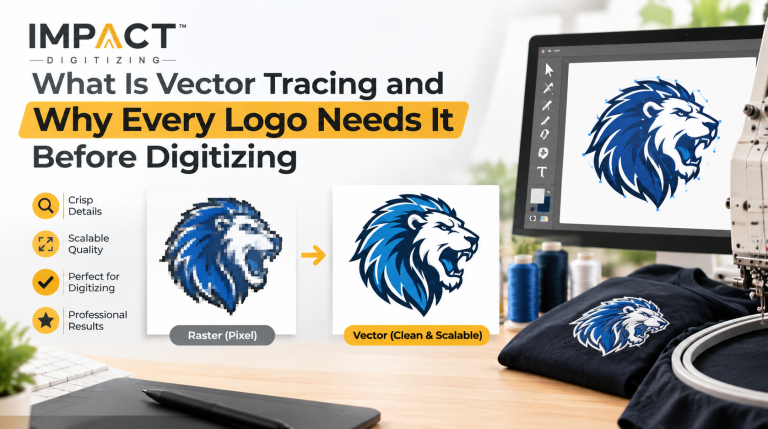
- Simple Vector Logo: Tests pathing, fill density, and satin border quality.
- Small Text & Fine Detail: Tests stitch clarity and underlay precision on small lettering.
- Structured Cap or Textured Fleece: Tests pull compensation and registration alignment on challenging fabrics.
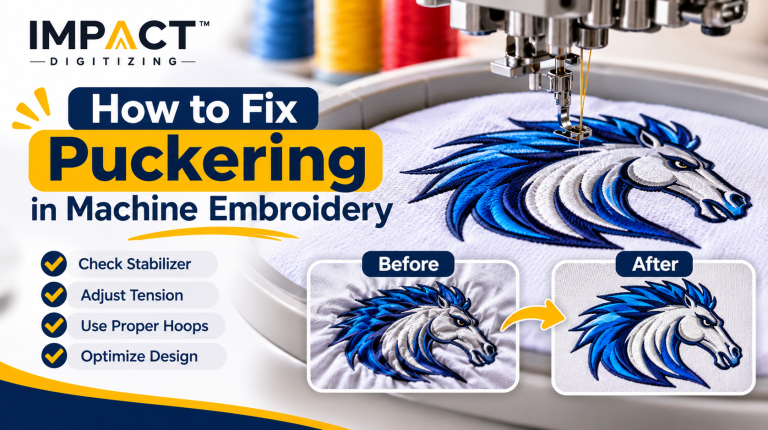
Run these test files on your own machines using standard backing and thread. Look for flat finishes, zero fabric puckering, and smooth machine performance. Before running your tests, review Common Mistakes in Digitizing Projects to spot common file defects easily.
The 14-Point Partner Scorecard
A dependable provider offering a choose embroidery digitizing service framework should consistently meet key operational criteria. To learn more about picking the right vendor, read our guide on how to find the best embroidery digitizing service. Utilize this 14-point scorecard to systematically evaluate potential partners:
| S.NO | Evaluation Criteria | What to Ask & Look For |
| 1 | Quality Consistency | Can they deliver identical stitch quality across different garment types and design sizes? |
| 2 | Revision Policy | Are minor edits and tweaks free? What is the standard turnaround time for revisions? |
| 3 | Turnaround Time | Are standard, rush, and bulk turnaround times explicitly stated in writing? |
| 4 | Communication & Support | Is there a responsive contact person who confirms receipt and clarifies briefs immediately? |
| 5 | Supported File Formats | Do they supply machine-native formats (DST, PES, EMB, EXP, JEF) matching your equipment? |
6 | Artwork Confidentiality | Do they guarantee strict NDA compliance and protect your client’s proprietary logo rights? |
| 7 | Transparent Pricing | Is pricing straightforward based on design size/complexity, free of surprise add-ons? |
| 8 | Bulk Order Capacity | Do they offer streamlined batch intake and discounted rates for large corporate runs? |
| 9 | Sample Testing | Are they willing to digitize a test design so you can evaluate stitch quality on your own machines? |
| 10 | Specialty Fabric Expertise | Do they know how to adjust parameters for 3D puff, performance wear, caps, or towels? |
| 11 | Production Support | Can their team assist if a file encounters unexpected thread breaks or alignment issues? |
| 12 | Scalability | Can their infrastructure easily accommodate your busiest seasonal surges without delay? |
| 13 | Archiving & Reorders | Do they archive past master files for easy resubmissions and consistent exact-match reorders? |
| 14 | Production-Ready Sheets | Do deliverables include detailed run sheets with thread sequences, dimensions, and stitch counts? |
Pro Tip: Print out this checklist to use as a vendor scorecard when interviewing new digitizing vendors.
Onboarding Checklist: Your First 30 Days
- Week 1: Have sample testing for your work, file format preference, and shop machine specifications.
- Week 2: Do sew tests on your machines, note any pathing comments, and see how revisions are handled.
- Week 3: Determine standard turnaround times, develop emergency rush procedures, and confirm direct communication processes.
- Week 4: Evaluate overall performance using the scorecard and agree to production terms.
Order Submission Checklist: Make sure you always submit clean artwork, target dimensions, fabric type, machine format, thread manufacturer color, and placement.
Common Outsourcing Mistakes
Do not make these common mistakes while outsourcing your embroidery digitizing:
- Choosing an outsourcing partner based on their low base prices without considering their costs for thread breakages.
- Offering low-quality images without information about the garment or fabric’s structure.
- Not testing the stitching on your own machines before placing an order.
- Constantly changing outsourcing partners to such an extent that no partner can get to know your preferences.
- Failing to establish revision policies before placing your first order.
The Bottom Line
Creating an efficient production process requires locating an embroidery digitizing service that acts as an extension of your embroidery team. You protect your business’s reputation as well as ensure future profits by ensuring machine efficiency, prompt communication, and commercial embroidery digitizing services with Impact Digitizing.
Partnering with Impact Digitizing guarantees high-quality, fabric-specific outsourced embroidery digitizing with fast turnarounds and transparent pricing.
FAQs
1. How do I choose a good embroidery digitizing company?
Select providers that use fabric-based settings, have fast support, charge clear prices, generate native files, and perform free sample tests.
2. What should I ask a digitizer before ordering?
Ask about quality control checks, delivery times, revisions, machine settings, and fabric-specific pull compensation.
3. How much should embroidery digitizing cost?
Cost varies depending on complexity level. High-quality files can help you save money due to less machine thread breakage and fabric damage.
4. Is it better to hire a freelancer or a digitizing company?
Digitizing companies provide guaranteed turnaround time, scalability, backup support, and quality control, which a freelancer cannot provide.
5. What is a fair turnaround time for digitizing?
The standard commercial turnaround time is 12 to 24 hours. There are also 4- to 8-hour rush services offered by reliable companies.
6. Should a digitizer offer free revisions?
Yes, professional digitizing firms provide free revisions for file mistakes, stitch issues, and size changes.
7. How can I check digitizing quality before ordering in bulk?
Order a trial test design with small text and run it on your machines to check pathing and density.
8. What file formats should a digitizing partner deliver?
They should provide native machine files like DST, PES, or EXP alongside visual PDF color worksheets and stitch guides.