As the printing industry keeps expanding in 2026, upgrading to an automatic press has become one of the clearest ways for a shop to keep up with rising demand. Choosing the best automatic screen printing machines is the key to increasing production rates and accuracy. At Impact Digitizing, we’ve seen automation be the single biggest turning point for shops looking to scale.
Why Is Automation Worth the Investment?
Manual presses act as a hard ceiling for your growth. Once your orders climb past what a two-person team can handle, you stop growing and start stalling. Here is why shops are making the move:
- Higher Volume: Automatic presses handle runs that would take days on a manual press, finishing them in hours.
- Precision: The new automatic screen printing machine 2026 models have a smart auto-registration feature that greatly reduces mistakes.
- Faster Turnaround: You can now agree to quick orders that you would have had to refuse before.
If your team is still building out its setup, it’s worth reviewing the fundamentals in What Is Serigraph Print? Before jumping into equipment decisions.
Automatic vs. Manual: Which Actually Makes Sense for You
Honestly, not every shop needs an auto. If you are doing under 100 prints a day, keep the manual press. The automatic vs manual screen printing machine choice is driven by volume, not ego.
| Feature | Manual Press | Automatic Press |
| Startup Cost | Low ($500–$3k) | High ($12k–$70k+) |
| Speed | Slow (40–60/hr) | Fast (300–800+/hr) |
| Labor | High | Low |
| Best For | Hobby/Short runs | Scaling/High-volume |
The automatic vs manual screen printing machine debate really comes down to the math of labor hours saved versus the upfront capital. If you find yourself turning down work, you’ve found your answer.
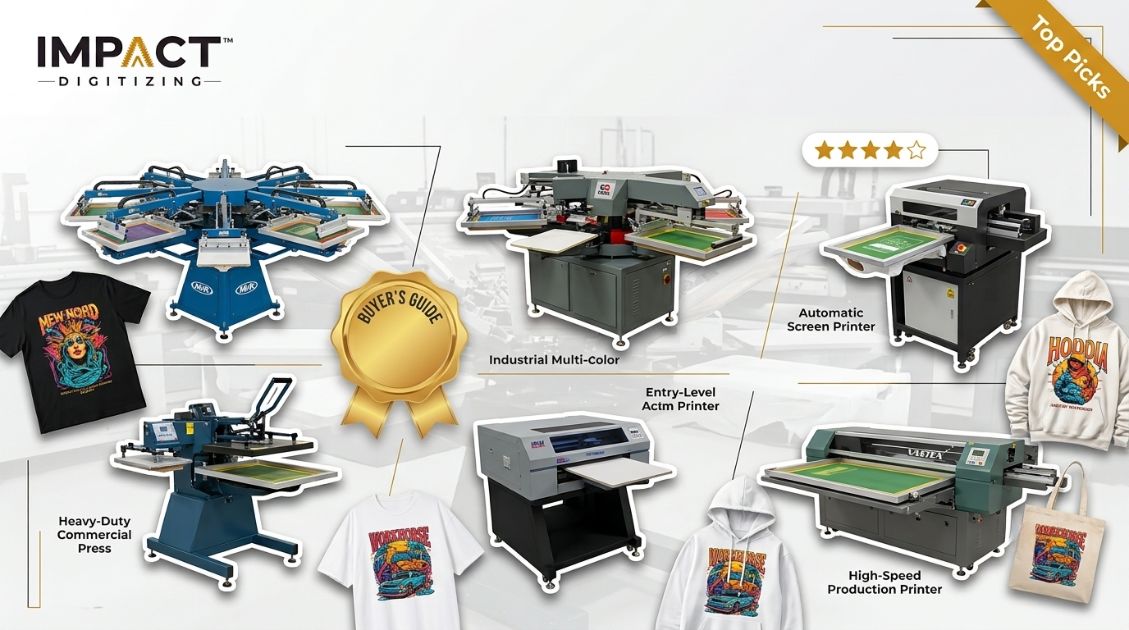
The 8 Best Automatic Screen Printing Machines of 2026
When evaluating these machines, look for long-term reliability and manufacturer support over raw, on-paper speed specs.
1. The Entry-Level Carousel (6/6)
This machine is the perfect entry point for your first jump into automation. It provides simple controls for shop owners moving away from manual printing.
2. The Mid-Range Carousel (8–10 Stations)
This is an industry workhorse for shops printing over 500 shirts daily. As you research the top screen printing equipment for small business operations, this model offers enough flexibility for multi-color runs without overwhelming your floor space.
3. The Rotary Screen Printing Machine (8–12 Stations)
This high-volume rotary screen printing machine excels when speed is your primary goal. It is built for consistency and handles back-to-back jobs with minimal downtime.
4. The Oval/Compact Hybrid (8 Stations)
Floor space is a constraint for many growing shops. This layout provides the benefits of an automatic screen printing machine in 2026 while fitting into a much smaller footprint.
5. High-Speed Rotary Press (12–16 Stations)
Designed for 24/7 production, this is considered by many to be the best screen printing press for business owners running high-capacity shifts. Note that it requires a skilled engineer to maintain precision at top speeds.
6. Budget-Friendly Automatic (6 Stations)
This model is an ideal first upgrade from a manual setup. It keeps costs low while providing the reliable pressure that an automatic screen printing machine 2026 provides.
7. Oversized Print Automatic (12–14 Stations)
When clients demand large hoodie prints, do not settle for small pallets. These machines feature extra print area to handle specialty jobs that others turn away.
8. Digital-Hybrid Automatic (10 Stations)
This machine blends traditional screen ink with digital precision. It is a premium investment for shops wanting to produce photo-real gradients for high-end client projects.
Note: For deep integration of your digital workflow, refer to our YUDU Screen Printing Machine Guide.
Rotary vs. Oval/Carousel: What’s the Real Difference
The debate between these styles is usually decided by your product mix. A rotary screen printing machine is a specialized tool, whereas carousels remain the most common sight in active shirt shops.
- Continuous Flow: Rotary setups are built for non-stop fabric or high-volume runs where speed is the only metric.
- Versatility: Carousel and oval machines handle varied, smaller batches much more easily.
- Investment: While the automatic vs manual screen printing machine cost gap is wide, a rotary press requires an even higher upfront investment, though per-unit costs drop significantly at scale.
- Operation: Keep in mind that a rotary screen printing machine often requires more specialized operator training than a standard carousel.
What a Small Business Should Actually Look For
Selecting the top screen printing equipment for a small business is a calculation of your shop’s physical and financial reality. Do not buy the machine that looks best on paper; buy the one that fits your daily workflow.
- Space & Power: Measure your floor space and check your power capacity before ordering; these machines have large footprints.
- Hidden Costs: The best screen printing press for business use requires a budget for more than just the machine, including ink, screens, and maintenance.
- Capacity Check: Does the machine match your actual daily volume, or just your “dream” volume?
- Expert Support: Ensure you have access to local parts and service for the top screen printing equipment for small businesses.
Screen Printing vs. Other Decoration Methods
Screen printing is rarely the only solution in a modern shop. To ensure you have the best screen printing press for business success, you must know when to switch gears:
- Durable: Screen printing is more appropriate when producing products that should have longevity.
- Design Considerations: To learn how to create real-life designs, read our guide on DTG (Direct-to-Garment).
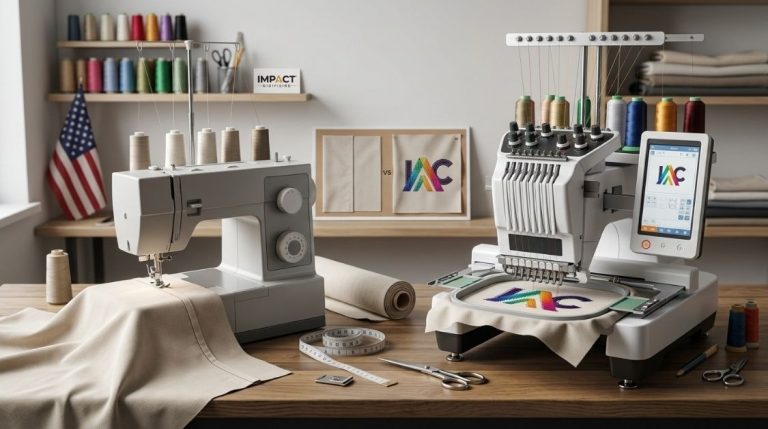
- Corporate Needs: If your clients want classy branding, first look at the differences between embroidery and printing.
Whatever method you land on, one rule holds regardless: your final output is only as good as the art file you start with.
Conclusion
An automatic press turns a shop from a slow, manual operation into a fast, efficient production line. Choosing the right machine for your space and order volume is what makes that upgrade pay off in today’s competitive print market. Impact Digitizing is here to help you navigate that decision and keep your shop at the front of the industry.
FAQs
What is the difference between automatic and manual screen printing machines?
Manual is hand-operated for low volume; automatic is machine-driven for high-speed consistency.
How much does an automatic screen printing machine cost?
Professional models generally range from $12,000 to over $70,000, depending on features.
Which screen printing machine is best for a small business/startup?
Compact carousels like the Workhorse WM-6 are ideal for entry-level automation.
Do automatic screen printing machines need a separate dryer?
Yes, a conveyor dryer is essential to cure the high volume of garments produced.
Is automatic screen printing worth it over manual presses?
Yes, if your volume exceeds 100+ prints daily and you need to scale production.